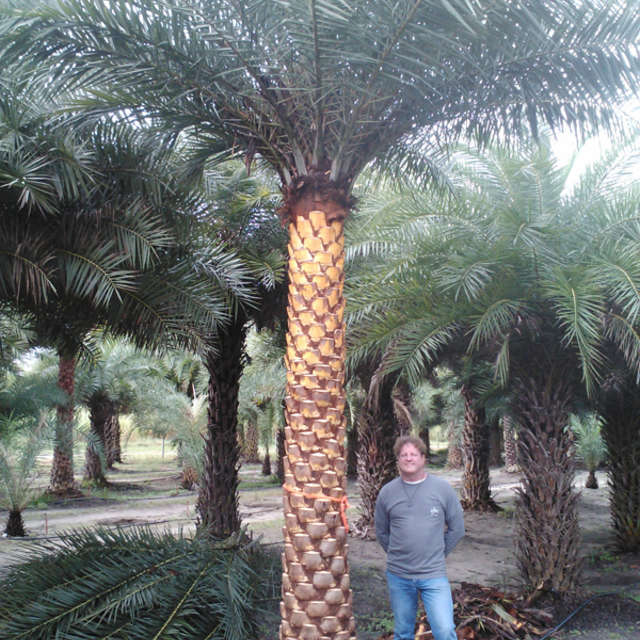
Sylvester palm, India date palm and silver date palm are three common names for the same tree. Its scientific name is Phoenix sylvestris Robusta. Shoppers and growers use all three names, so a single search can miss listings. This guide explains the names, how to search for the right palm and what to ask before you buy.
One Palm, Three Common Names
The palm grown on our farm is Phoenix sylvestris Robusta. Its common names include Sylvester palm, India date palm and silver date palm. People often use these names in different ways, so a search may not show every listing. Knowing all three names helps you find the palm you want.
Names can also cause confusion between nurseries. Ask any grower to confirm the scientific name on a listing. That one check helps you compare the right plants side by side.
How to Search for the Right Palm
Start with the scientific name, Phoenix sylvestris Robusta. Then try the common names, one at a time. Look at photos of the trunk and crown, and note the palm's size. Save any listing that matches the look you want.
- Search by the scientific name first.
- Try Sylvester palm, India date palm and silver date palm.
- Check the palm's grade and size in the listing.
- Confirm where the palm is grown and how it was handled.
Careful searching saves time later. A few minutes of comparison can help you avoid a palm that does not fit your space.
Why Field-Grown Matters
Our palms are field-grown on the farm in Vero Beach, FL, not containerized. A field-grown palm has spent its growing years in the ground. That is a different starting point from a palm grown in a pot. Ask any grower where their palms are grown before you choose one.
Ask, too, how the palm is prepared for transport. The root ball matters a great deal. Our crew root-wraps each palm in the field, which protects the roots on the way to your site.
Grades and Sizes Explained
Our palms are graded as specimen and Florida Fancy. Sizes run from 7 feet overall height up to 9 feet of clear trunk. Some specimens are over 20 feet overall height. Clear trunk and overall height describe different parts of the palm, so read both numbers carefully.
Ask what the grade means for the palm you are considering. Ask whether a listed size is overall height or clear trunk. Clear answers help you match the palm to your planting space.
Getting the Palm to Your Site
Delivery is available for every order. The crew root-wraps the palm in the field, loads it with a loader onto a trailer or flatbed, and delivers it to the site. The delivery price is not published. Call 772-778-3006 with the planting address to request a quote.
Plant as soon as possible after delivery. If planting must wait, keep the root wrap on and set the palm in a shady, well-ventilated spot. Prepare the site ahead of time, so you can plant quickly when the palm arrives. Our date palms page is a good place to start your search.
Visiting the Farm to Pick Your Palm
Customers can visit the farm, walk the rows and pick the exact palm. Call ahead before visiting, so we can plan for your time. Jerry meets customers in the field, which gives you a chance to ask questions face to face.
Bring a measuring tape and a photo of your planting spot. Note the height of nearby structures and any overhead wires. With those details, you can choose a palm that fits the space and avoids surprises on delivery day.
Planting Basics
Good planting makes a big difference in the first year. Dig the hole about twice as wide as the root ball, but only as deep as the palm was grown. Never bury the trunk. Backfill with a soil and gravel mix, pack out air pockets, build a soil dam and soak the area fully.
After planting, water daily or every other day for the first two weeks. Fertilize in spring, summer and early fall with a slow-release fertilizer containing manganese, magnesium, potassium, iron and copper sulfates. Follow the product label for amounts and timing.
Check the palm often during its first season. Look for new growth and any signs of stress. If something looks off, call the farm and describe what you see. Early questions are easier to answer than late ones.
First Care Questions to Ask
Bring these questions to your call or visit:
- How deep should the hole be for this palm?
- How often should I water during the first two weeks?
- What fertilizer should I use, and when?
- What should I do if planting has to be delayed?
Write the answers down and keep them near your planting plan. That way the advice is ready when you need it.
Choosing a Single Palm or a Pair
Sometimes the question is not the name. It is whether to plant one palm or a matched pair. A matched pair can frame a driveway or entryway. A single palm can anchor a corner of the yard. Think about the view from the house and the street, and how the palms will look as they grow.
Plan the spacing before delivery day. Mark the spots with stakes or a garden hose, so you can see the layout clearly from the house.
If you are still deciding between palm types, our guide on Sylvester, Canary and Medjool palms explains how the three differ. It is a helpful read before you call.
Ready to find your Sylvester palm? Sylvestris Tree Farms grows palms in the field in Vero Beach, and we serve Vero Beach and Indian River County. Request a quote by calling 772-778-3006 with your planting address, and plan a farm visit ahead of time.
Frequently Asked Questions
Are Sylvester palm and India date palm the same tree?
Yes. Sylvester palm, India date palm and silver date palm are common names for Phoenix sylvestris Robusta. Confirm the scientific name when you compare listings.
Are your palms grown in containers?
No. Our palms are field-grown on the farm in Vero Beach, FL, not containerized.
How do I get a palm delivered?
Delivery is available for every order. Call 772-778-3006 with your planting address to request a quote.
Can I visit the farm to pick a palm?
Yes. Customers can walk the rows and pick the exact palm. Call ahead before visiting.