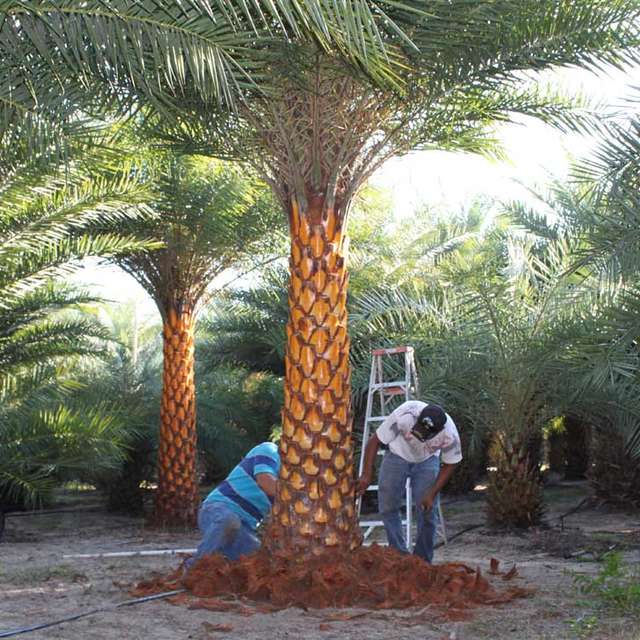
Dig the planting hole about twice as wide as the root ball, but only as deep as the palm was grown in the field. Width gives the roots loose soil to spread into. Depth matters just as much, because a hole that is too deep can sink the palm and bury the trunk. Get the width and depth right, and the palm has the best start in Vero Beach.
Why Width Matters More Than Depth
New roots need soft soil to grow into. When the hole is only slightly bigger than the root ball, the roots have to push through hard, packed ground. That slows the palm down. A wider hole loosens the soil around the root ball, so new roots can reach out quickly.
Many people dig a narrow, deep hole because it feels like more work is being done. In practice, a wide hole is the better choice. Dig out and loosen the soil on all sides, not just under the palm.
Why Depth Must Stay Shallow
A palm should sit in the ground at the same depth it grew in the field. The soil line on the trunk should match the line where the palm was growing. If you dig too deep and set the palm lower, the trunk ends up buried. Buried trunks can rot, and that damage is hard to reverse.
Check the depth before you set the palm. Lay a straight board or shovel handle across the hole to see how deep it is. The root ball should sit on firm, undisturbed soil at the bottom, not on loose dirt that will settle later.
Look at the Root Ball First
Before you dig, look at the palm you are planting. Our palms are field-grown on the farm in Vero Beach, not grown in containers. The crew root-wraps each palm in the field, so the root ball is covered and protected. Keep that wrap in place until the palm is in the hole, and then cut it away carefully.
Measure the root ball width. Your hole should be roughly twice that size across. If the root ball is large, the hole will be large too. Plan for the space, and clear any grass, sod, or debris from the area before you start.
Digging the Hole Step by Step
Follow these steps for a clean, solid planting:
- Mark the hole size on the ground, about twice the root ball width.
- Dig down only as far as the palm was grown, and keep the bottom flat and firm.
- Loosen the sides of the hole so roots can move outward.
- Set the palm straight, with the trunk at the right height above the soil line.
- Check the palm from more than one side before you backfill.
Take your time with the setting step. A palm that leans or sits too low is hard to correct once the soil is packed around it.
Backfilling the Hole
Backfill with a mix of soil and gravel, following the planting guidance we give with each palm. Add the mix in layers, and pack it gently to remove air pockets. Air pockets dry out roots, so work the mix around the root ball with care.
Build a soil dam, or a low ring of soil, around the outer edge of the hole. The dam holds water over the root zone instead of letting it run off. Then soak the hole fully. A deep soak helps the soil settle and gives the roots moisture right away.
Watering the First Two Weeks
Water is the most important care in the first weeks. After planting, water the palm daily or every other day for the first two weeks. Check the soil with your finger before each watering. The root zone should stay moist, but it should never sit in standing water for long periods.
After the first two weeks, change your watering pattern to match the weather. Hot, dry spells need more water. Rainy stretches need less. Watch the palm for signs of stress, such as drooping fronds or dry, brittle edges.
Feeding the Palm After Planting
Use a slow-release palm fertilizer in spring, summer, and early fall. Look for a blend that includes manganese, magnesium, potassium, iron, and copper. Follow the label directions, and spread the fertilizer across the root zone, keeping it away from the trunk. Palms in Florida sandy soil often benefit from regular feeding.
Common Planting Mistakes
- Digging a narrow hole that does not give roots room to grow.
- Setting the palm too deep, which buries the trunk.
- Leaving air pockets in the backfill.
- Forgetting to build a soil dam, so water runs away.
- Skipping water during the first two weeks.
- Planting in a spot that stays soggy after rain.
Avoid these mistakes, and the palm has a much better chance to settle in quickly.
Planning Your Site Before Delivery
Choose the planting spot before the palm arrives. Make sure there is room for the root ball, and confirm that the area has good drainage. Look for overhead wires, buried lines, and nearby structures. A palm that is planted early is less stressed, so plan the hole in advance.
If planting must wait, keep the root wrap on the palm and place it in a shady, well-ventilated spot. Plant as soon as possible after delivery. Waiting too long can stress the root system.
Questions to Ask Before You Plant
- How wide is the root ball, and how big should my hole be?
- How deep was this palm grown, and where should the soil line sit on the trunk?
- What backfill mix do you recommend for my soil?
- How often should I water in the first two weeks?
- When is the best time to fertilize my palm?
Ask these questions before the palm goes in the ground. A few minutes of planning can prevent problems later.
Plan Your Palm With Sylvestris Tree Farms
Our palms are grown on our farm in Vero Beach, and we serve Vero Beach and Indian River County. You can visit the farm, walk the rows, and pick the exact palm you want. Please call ahead before you visit. Owner Jerry meets customers in the field, so you can talk through the palm and the planting site together.
Delivery is available for every order. Our crew loads the palm onto a trailer or flatbed and delivers it to your site. For more on planting and first-year care, read our planting and care guidance, or see our Sylvester palm care guide.
Delivery price is not published. Call 772-778-3006 with your planting address for a quote. Tell us where the palm is going, and we will help you plan the next step.
Frequently Asked Questions
How wide should the hole be for a Sylvester palm?
Dig the hole about twice as wide as the root ball. The extra width loosens the soil so new roots can spread out quickly.
How deep should I dig the planting hole?
Dig only as deep as the palm was grown in the field. The trunk should sit at the same soil line, and it should never be buried.
How often should I water a newly planted Sylvester palm?
Water daily or every other day for the first two weeks. Check the soil before each watering, and keep the root zone moist without leaving it soggy.
How do I get a quote for delivery?
Call 772-778-3006 with your planting address. Delivery price is not published, so the quote is based on your site.