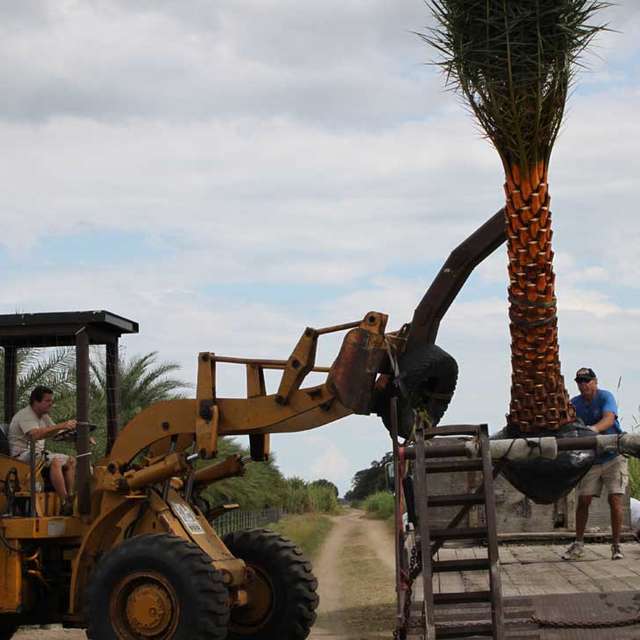
A Sylvester palm is a long-term investment in a landscape, and how it’s planted and cared for in the first year does more to determine its long-term health than almost anything after. The good news is that once established, the Sylvester palm is genuinely low-maintenance — disease- and pest-resistant, wind-tolerant, and cold-hardy below 20°F. But that first year of establishment matters. Here’s the full care sheet we walk every customer through.
Digging the Planting Hole
Start by digging the hole twice as wide as the palm’s root ball. Width matters more than most people expect — a wide hole gives the roots loose, workable soil to expand into as the palm establishes, rather than fighting compacted native soil at the edges.
Planting Depth
Plant the palm at the same depth it was grown at in the field — no deeper. The trunk should never be buried. Planting too deep is one of the most common mistakes with palm installation, and it can cause serious problems with trunk health over time. If you’re unsure where the original grade line is, look for the visible transition in trunk coloring or texture from the field-grown portion.
Backfilling and Watering In
Once the palm is set at the right depth, backfill around the root ball, packing the soil firmly to eliminate air pockets. Build a water dam — a shallow ring of soil around the base of the planting area — to hold water directly over the root zone rather than letting it run off. Give the palm a deep soak immediately after planting.
First Two Weeks: Watering Schedule
After the initial soak, water daily or every other day for the first two weeks. This is the critical establishment window, when the root system is working to reconnect with the surrounding soil and the palm is most vulnerable to drying out. Consistent moisture during this period makes a measurable difference in how quickly the palm settles in.
Fertilizing: What to Use and When
Fertilize in spring, summer, and early fall using a slow-release fertilizer formulated with manganese, magnesium, potassium, iron, and copper sulfates. These minerals address the nutrient deficiencies palms are most prone to, and a slow-release formula feeds the palm gradually rather than in a single burst, which suits the palm’s steady growth pattern better than a fast-release product.
What Happens After Establishment
Once a Sylvester palm is established, it’s one of the lower-maintenance palm species you can plant in a Florida landscape. It resists disease and pests, holds up well in high winds, and tolerates cold better than most palms grown in the state. The upfront care during planting and the first year is what sets that low-maintenance payoff in motion.
Have Questions About Your Palm?
Every palm and every planting site is a little different. If you have questions about care for a Sylvester palm you’ve purchased — or you’re still deciding on size and grade — see The Palms for what we grow, or reach out through our contact page and we’ll walk you through it.