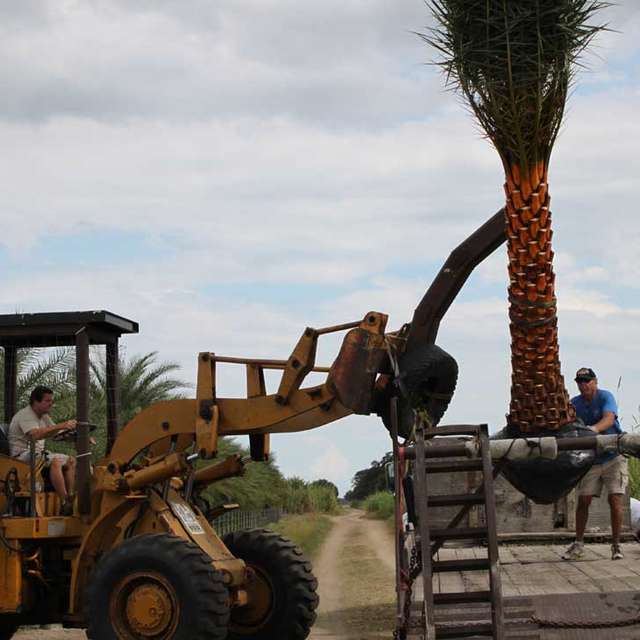
A new Sylvester palm needs a deep soak at planting, then regular watering for its first two weeks. Water daily or every other day during this time, and watch the palm for signs that it needs more or less. Getting water right in these early days helps the roots settle into the new soil.
Why the First Two Weeks Matter
A palm moved from the farm to your yard has to grow new roots into native soil. Those roots are still getting established, so they cannot pull in water as easily as established roots can. The soil around the root ball may also dry out faster than the surrounding ground.
Consistent watering in these early weeks gives the roots a steady supply. It also keeps the root zone from drying out between waterings. Small, regular attention now often matters more than one large soak later.
The Deep Soak at Planting
Right after planting, give the palm a full, deep soak. The goal is to wet the entire root ball and the soil around it. Fill the basin you built around the palm and let the water sink in slowly. Then check that the soil is saturated down through the root zone.
Do not stop after one pass. Once the water drains, soak the area again. A thorough first soak helps remove air pockets and settles the backfill around the roots.
Daily or Every Other Day for Two Weeks
For the first two weeks after planting, water daily or every other day. Use your judgment based on weather and soil. Hot, dry, windy days call for daily watering. Mild, cloudy days may allow a gap between waterings. Sandy soil drains quickly and may need more frequent water than heavier soil.
Aim for a steady pattern rather than a random one. Many growers water in the early morning, so the palm has the day to take up water before the heat builds. Keep a simple note on your phone or on the fridge so you do not lose track.
Check the Soil, Not the Calendar
A set schedule is a good starting point, but the soil tells the real story. Push a finger or a thin stick into the soil near the root ball. If it feels dry a few inches down, the palm likely needs water. If it feels wet and heavy, hold off for a day or two.
Soil dries differently across a yard. A spot under a roof edge, beside a driveway or on a slope can dry faster. Check several spots around the palm before you decide how much to water.
Signs of Too Little Water
A thirsty palm gives clear signals. Watch for fronds that droop, look dull or start to brown at the tips. Soil that pulls away from the edge of the basin or cracks at the surface is another sign. If the palm looks stressed in the heat of the afternoon, check the soil right away.
If you see these signs, water deeply and check again the next morning. Do not wait until the damage spreads. Quick action helps the palm recover.
Signs of Too Much Water
Too much water can be just as harmful. Soggy soil that stays wet for days can starve roots of air. Watch for yellowing fronds, a sour or musty smell at the base or soil that stays puddled in the basin. These signs often show up when watering continues after rain.
When the soil is still wet, skip the next watering. Make sure the basin drains well and the soil dam does not hold water in a pool around the trunk.
Keep the Trunk Dry and Clear
Water the soil and root ball, not the trunk or crown. Keep water away from the center of the fronds where new growth forms. Clear mulch, grass and debris back from the trunk so air can move around the base. This simple step lowers the risk of rot.
Protect the Root Ball During Waiting Time
If planting has to wait after delivery, keep the root wrap on and place the palm in a shady, well-ventilated spot. Water it lightly so the root ball does not dry out. Plant as soon as you can, because the sooner the roots reach the soil, the sooner they can start drawing water on their own.
Feeding a New Palm
Fertilizer should follow the watering routine, not replace it. A slow-release fertilizer applied in spring, summer and early fall helps the palm grow. Choose a product with manganese, magnesium, potassium, iron and copper sulfates. Follow the label instructions for amounts, and do not apply fertilizer to a dry root ball.
Why Local Growing Helps
Our palms are field-grown on our farm in Vero Beach, Florida. They are not containerized. That means the roots have grown in the ground in our local climate. Every yard is different, so talk through your site before planting.
Common Watering Mistakes
- Watering too little after planting. The root ball can dry out before new roots reach the soil.
- Forgetting the weekends. A plan with no reminder often slips when the week gets busy.
- Soaking the trunk. Keep water in the basin and off the crown.
- Ignoring rain. Skip a watering after a heavy storm and check the soil first.
- Building the basin too shallow. Water runs off instead of soaking the root zone.
A Quick Plan for Your First Two Weeks
Day one: deep soak, then check the basin for drainage. Days two through fourteen: water daily or every other day based on the soil. Check the palm each morning for drooping fronds or soggy soil. Adjust for weather, and keep the trunk dry. After two weeks, shift to a pattern that keeps the soil evenly moist without staying wet.
Visit the Farm Before You Plant
Customers can visit the farm, walk the rows and pick the exact palm. Call ahead before you come. Owner Jerry meets customers in the field, so you can ask questions about your site and your plan. Delivery is available for every order, and the crew root-wraps the palm and loads it onto a trailer or flatbed.
Next Steps With Your Palm
Set up your watering plan before the palm arrives. Mark the basin, keep a hose ready and check the forecast. Then plant, soak and begin your two-week routine. If you have questions about your palm, our planting care guide covers the next steps in detail.
For more on common concerns after planting, read our post on transplant shock in Sylvester palms. It explains what to watch for in the weeks that follow.
Ready to plan your palm? Call Sylvestris Tree Farms at 772-778-3006 with your planting address for a quote. Our farm in Vero Beach serves Indian River County and delivers across Florida.
Frequently Asked Questions
How often should I water a new Sylvester palm?
Water daily or every other day for the first two weeks after planting. Adjust for weather and soil, and check the root zone before each watering.
How do I know if my palm is getting too much water?
Watch for yellowing fronds, a sour or musty smell at the base and soil that stays wet for days. Skip the next watering when the soil is still soggy.
Should I water the trunk?
No. Water the soil and root ball, and keep water away from the trunk and center of the fronds. Keep the base clear of mulch and debris.
Can I visit the farm before I buy?
Yes. Call ahead, then walk the rows and pick the exact palm. Owner Jerry meets customers in the field.