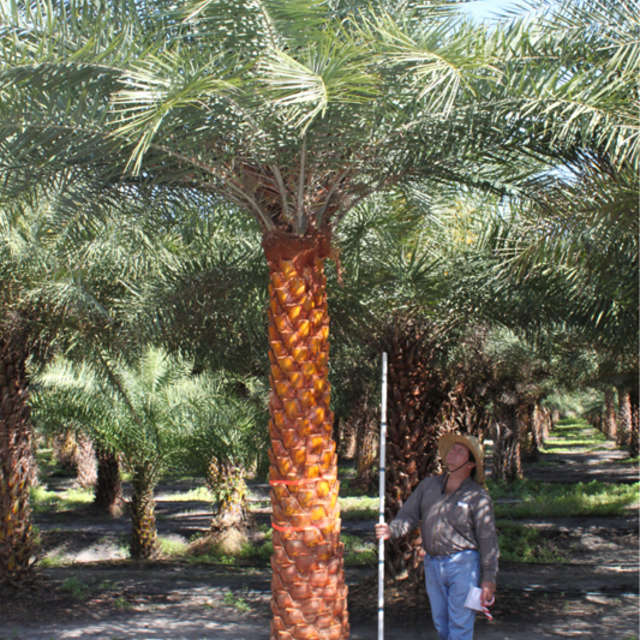
Sylvester palms do best with a slow-release fertilizer that includes manganese, magnesium, potassium, iron, and copper sulfates. Feed them in spring, summer, and early fall, when the palm is actively growing. These minerals support healthy fronds and steady growth, especially in the sandy soils common around Vero Beach.
Why Minerals Matter for Sylvester Palms
Palms need more than nitrogen to look their best. They also use small amounts of minerals that help leaves form, color, and hold up over time. When a mineral is missing, the palm can show signs in the fronds, such as pale color or slow new growth. A balanced feeding plan helps prevent these problems.
Sandy soil drains quickly. Water and nutrients can move past the root zone before the palm can use them. That is one reason slow-release products are a good fit for young palms in our area. They release nutrients over time, so the palm gets a steady supply rather than a quick burst.
The Key Minerals and What They Do
Manganese supports the palm's green color and healthy leaf development. Magnesium is part of the chlorophyll that helps leaves make energy from sunlight. Potassium supports strong growth and helps the palm handle heat and dry spells. Iron and copper support healthy new growth and leaf color.
Many palms need a mix of these minerals, not just one. A product that includes manganese, magnesium, potassium, iron, and copper sulfates covers the main needs in one feeding. Read the label to confirm the mix, and follow the directions for your palm's size and age.
When to Feed Your Palm
Spring is the main feeding time. As temperatures rise and the palm starts new growth, it can use the nutrients to build strong fronds. Summer feeding keeps the palm supplied during the hottest and wettest months, when rain can wash nutrients through the soil.
Early fall is a good time for one more feeding. The palm can use the nutrients to prepare for cooler weather. Stop feeding once the weather turns cold and growth slows. Feeding in winter is not needed, and it can be wasted because the palm is not growing much.
Feeding a Newly Planted Palm
A new palm needs time to settle in. If you have just planted a Sylvester palm, water it well and follow the first two weeks of watering guidance before you add fertilizer. Once the palm is established and growing new fronds, a regular feeding schedule can begin.
Keep fertilizer away from the trunk and spread it across the root zone, following the label. Too much fertilizer in one spot can stress the roots. Steady, measured feeding works better than heavy doses.
Signs a Palm Needs Attention
Watch the fronds closely. Pale or yellow new leaves can signal a nutrient issue, but they can also come from water stress, root problems, or other causes. Look at the pattern. Is the yellowing on the older fronds or the new ones? Is it spreading across the whole crown or only on one side?
Slow new growth is another sign to review your feeding and watering. Check the soil moisture before you water, and make sure the palm is not sitting in standing water. If the problem continues, a grower can help you find the cause.
Feeding and Watering Work Together
Fertilizer works best when the palm has enough water. Sandy soil needs regular watering, especially in dry weather. Water deeply rather than lightly, so the moisture reaches the roots. Avoid soaking the palm every day once it is established, since roots need air as well as water.
Rain can wash nutrients away. After a heavy rain, check whether the soil still feels moist and whether the palm looks healthy. Adjust your watering and feeding plan to match the weather in your yard.
Why Local Growing Conditions Matter
Our palms are field-grown on our farm in Vero Beach, FL, not containerized. That means they have grown in the same kind of soil and sun that many Indian River County yards have. This helps us share practical advice that fits local conditions.
Every yard is different. Shade, soil, drainage, and the age of the palm all affect how it responds to feeding. Ask about your specific site when you plan your care routine. For more on how to read the palm's signals, see our guide on a Sylvester palm turning yellow or brown.
Sizes, Grades, and Your Feeding Plan
Sylvester palms come in different sizes and grades. Specimen and Florida Fancy palms may have different trunk heights and overall heights. A larger palm may need more time to settle, and its root zone may be bigger. Keep these differences in mind when you plan your feeding schedule.
If you are not sure which size fits your space, ask before you buy. A farm visit can help you see the palms in person and choose the one that works best for your yard.
Planting Care and Fertilizer Together
Good planting care comes first. Dig the hole wide enough for the root ball, but no deeper than the palm was grown. Never bury the trunk. Backfill with a soil and gravel mix, pack out air pockets, and soak the palm well. A proper start gives the fertilizer something to work with.
Once the palm is in the ground, your feeding plan becomes part of the long-term routine. Keep a simple calendar with spring, summer, and early fall feedings marked. Note any changes in the fronds so you can share them with a grower if needed.
Getting Help From Sylvestris Tree Farms
Sylvestris Tree Farms grows field-grown Sylvester date palms in Vero Beach, FL. We offer palm delivery by trailer or flatbed, and we offer planting and first-year care guidance. Owner Jerry meets customers in the field, and you are welcome to visit the farm to walk the rows and pick your palm. Please call ahead before you visit.
We serve Vero Beach and Indian River County. For a delivery to your planting address, call us for a quote. Delivery pricing is not published online, so we will walk you through the details based on your location.
Next Steps
Start by checking your palm's current feeding routine. Write down when you last fertilized and what product you used. Look at the fronds and note any color changes or slow growth. This gives you a clear picture before you change anything.
Then plan your feeding calendar for spring, summer, and early fall. Choose a slow-release product that includes the key minerals, and follow the label directions. Watch the palm over the next few months and adjust as needed.
Call Sylvestris Tree Farms at 772-778-3006 with questions about your palm's feeding plan. You can also call to request a quote for delivery or to plan a farm visit. We are happy to talk through your yard and help you choose the right care steps.
Frequently Asked Questions
What minerals do Sylvester palms need?
A slow-release fertilizer with manganese, magnesium, potassium, iron, and copper sulfates covers the main needs. Read the label to confirm the mix and follow the directions for your palm.
When should I fertilize a Sylvester palm?
Feed in spring, summer, and early fall, when the palm is actively growing. Stop feeding as the weather cools and growth slows.
Should I fertilize a newly planted palm right away?
Give the palm time to settle in first. Water it well for the first two weeks, then start a regular feeding schedule once it is established and growing new fronds.
Why are my palm's fronds turning pale?
Pale fronds can come from a nutrient issue, but water stress or root problems can cause the same signs. Check where the color change shows up and call a grower if it continues.